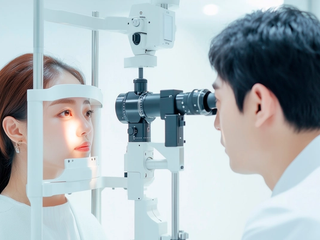
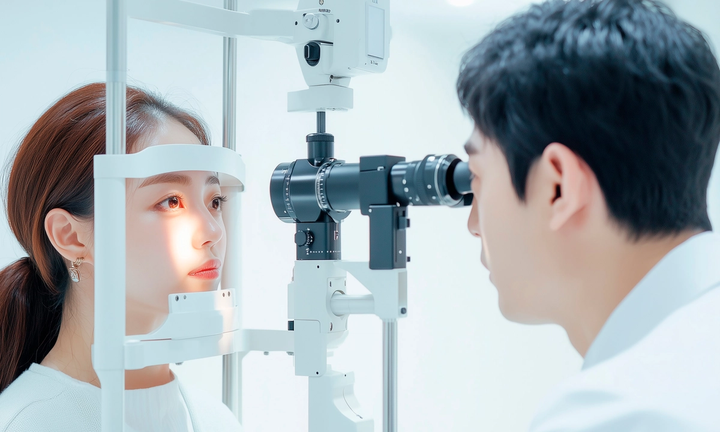
Preparing for LASIK starts weeks before the procedure rather than the night before. The step that matters most is taking contact lenses out early enough for the cornea to return to its natural shape, because the pre-operative measurements — and the laser plan built from them — depend on that shape. This guide covers LASIK preparation specifically: when to stop wearing contacts, what the pre-operative exam measures, what to avoid in the last days before surgery, and how to plan your stay if you are travelling for the procedure. If you are considering LASEK/PRK or SMILE instead, preparation for the exam and the contact-lens break follows the same reasoning, but the procedure-specific details are covered in their own guides.
Key takeaways
- Contact lenses change the shape of the cornea. In its LASIK patient guidance, the U.S. Food and Drug Administration advises stopping soft lenses 2 weeks, toric soft or rigid gas permeable lenses at least 3 weeks, and hard (PMMA) lenses at least 4 weeks before the baseline evaluation.
- Published periods differ between countries, and the period that applies to you is set by the clinic that will carry out your examination.
- The pre-operative exam measures refractive error, corneal thickness and surface shape, tear film and overall eye health. The corneal measurements are used to program the laser.
- From the day before surgery, creams, lotions, makeup and perfume are stopped, and someone else needs to take you home afterwards.
- The first follow-up visit is usually within 24 to 48 hours of surgery. Anyone travelling for the procedure should plan to stay at least until that visit is complete.
Why does preparing for LASIK start weeks in advance?
Preparation starts weeks in advance because the laser is programmed from measurements of the cornea, and those measurements are reliable only when the cornea is in its natural shape. Contact lenses alter that shape for days to weeks after they come out, so the pre-operative evaluation has to wait until the effect has worn off.
Whether you are a candidate at all is a separate question, decided at the examination from your own measurements and history. The factors involved are covered in the guide to LASIK age and eligibility; this article assumes that assessment is still to come and focuses on arriving at it prepared.
If LASEK/PRK or SMILE is what you are preparing for, the contact-lens break and the pre-operative measurements follow the same reasoning, but the procedure itself is different. See the SMILE and LASIK guide or the LASEK and PRK guide for what to expect from the surgical step.
How long do you need to stop wearing contacts before LASIK?
In its LASIK patient guidance, the U.S. Food and Drug Administration advises stopping soft contact lenses 2 weeks before the baseline evaluation, toric soft lenses or rigid gas permeable (RGP) lenses at least 3 weeks before, and hard (PMMA) lenses at least 4 weeks before. Individual surgeons set their own periods, which may be longer or shorter depending on the lens type and how long you have worn lenses.
The break is counted back from the evaluation, not from the surgery date, and lenses stay out from the evaluation until the procedure. The FDA's LASIK guidance sets out the following periods by lens type.
Time out of lenses before the baseline evaluation (FDA LASIK guidance) | |
|---|---|
| Soft contact lenses | 2 weeks |
| Toric soft lenses | At least 3 weeks |
| Rigid gas permeable (RGP) lenses | At least 3 weeks |
| Hard (PMMA) lenses | At least 4 weeks |
If you are having LASIK in Korea
Published guidance on how long to stop wearing contact lenses is not the same in every country. The periods in the FDA's LASIK guidance apply in the United States. In Korea, clinics commonly advise a shorter break before the pre-operative examination, and each clinic sets its own period rather than working from a single national figure. The periods advised in Korea vary by lens type, and each is a range rather than a fixed rule.
Period commonly advised in Korea, before the pre-operative examination | |
|---|---|
| Soft contact lenses | 4–7 days |
| Toric soft lenses (for astigmatism) | 6–14 days |
| Hard and rigid gas permeable (RGP) lenses | 10–14 days |
| Orthokeratology (overnight corneal reshaping) lenses | 1 month or more |
A shorter break sits alongside the examination rather than replacing it. What settles the question in practice is not the published number but whether the cornea has returned to a stable shape, and that is assessed at the pre-operative examination. If the measurements show swelling or distortion of the corneal surface, the wait continues before surgery is planned.
If you are travelling to Korea for LASIK, this affects the order in which you book. The contact-lens break starts at home, before you fly, and orthokeratology wearers need the longest lead time. Ask the clinic for the period it wants at the point you confirm the appointment, rather than working backwards from figures published elsewhere.
What does the pre-operative eye exam measure?
The pre-operative exam measures your refractive error, the thickness and surface shape of the cornea, the quality and quantity of your tears, and the overall health of the eye. According to the American Academy of Ophthalmology, the corneal measurements are used directly to program the laser, which is why they are taken with the cornea in its natural shape.
The examination typically includes:
- Vision and refraction testing, which confirms that the prescription has not changed and shows how large the refractive error is. A change in the glasses or contact-lens prescription within the past year is described by the FDA as refractive instability, and is a reason to wait.
- Corneal thickness and surface mapping (topography). For LASIK, the surgeon checks whether enough corneal tissue would remain after the planned correction; that judgment is made from your own measurements.
- Tear film assessment, in some cases, to check for dry eye and how severe it is. Dry eye tends to be aggravated by LASIK, so it is identified before surgery rather than after.
- Pupil size measured in a dark room. The FDA advises that this evaluation is done in dim lighting, because pupils are larger in the dark than in a bright exam room.
- Screening for eyelid and eye conditions, including inflammation of the eyelids (blepharitis), which may increase the risk of infection or inflammation of the cornea after surgery.
The exam also relies on what you tell the surgeon. The FDA asks patients to report past and present medical and eye conditions, and all medications including over-the-counter ones, because some conditions and medications affect wound healing. This part cannot be measured by an instrument, so it is worth preparing a written list before the visit.

The evaluation ends with a discussion of risks, benefits and alternatives, and with time to decide. The FDA is explicit that patients should not feel pressured by anyone to decide about surgery, and should have the chance to review the information and ask further questions before signing consent. For someone on a fixed travel schedule, that time needs to be built into the plan rather than squeezed out of it.
What should you avoid in the days before LASIK?
From the day before surgery, the FDA's LASIK guidance advises stopping creams, lotions, makeup and perfume, because residue on the skin and along the eyelashes can increase the risk of infection during and after surgery. Your surgeon may also ask you to scrub your eyelashes for a period before the procedure, and to arrange for someone to take you home.
Important
The day before surgery, stop using creams, lotions, makeup and perfume. Do not plan to drive yourself home: you may be given medication to help you relax, and your vision may be blurry afterwards.
Medications are a question for the surgeon, not a checklist item. The FDA lists some medications, such as retinoic acid and steroids, among the factors that may prevent proper healing, and asks patients to disclose everything they take. That disclosure happens at the evaluation; the decision on whether anything is paused rests with the surgeon.
Two practical items are easier to settle before travel than after. The FDA notes that some jobs and military services prohibit certain refractive procedures, so it is worth checking with an employer or professional body before booking. And because contact sports are restricted for at least four weeks after surgery, and swimming, hot tubs and whirlpools for one to two months, an active holiday planned around the surgery date may need to move.
What happens on the day of LASIK surgery?
FDA patient guidance describes the LASIK procedure itself as taking less than 30 minutes. You lie on your back, numbing drops are placed in the eye, an instrument holds the eyelids open, and you are asked to stare at a fixation light while the laser works. The procedure is done in an outpatient surgery centre or the ophthalmologist's office, and you go home the same day with someone else driving.
The FDA's account of the LASIK procedure gives a sense of what is felt and heard. When a suction ring is placed on the eye, vision dims and there is pressure, which may be uncomfortable. During the laser stage the laser makes a ticking sound, and some people notice a smell. Vision fluctuates through the procedure but does not go away entirely. The FDA also notes that a patient who cannot keep their gaze fixed on a light for at least 60 seconds may not be a good candidate for the surgery, which is worth knowing before the day rather than on it.
The step in the middle is what makes LASIK different from LASEK/PRK or SMILE: it creates a thin corneal flap, which is then lifted before the laser reshapes the tissue underneath.
Immediately afterwards, the eye may burn, itch or feel as if something is in it, and vision is likely to be hazy. A shield is placed over the eye, and the FDA emphasises not rubbing the eye because rubbing can dislodge the flap. Plan to go home and rest. What the following days look like is covered in the LASIK recovery time guide.
When to see a doctor
If you have severe pain after surgery, or if your vision or other symptoms get worse instead of better, contact your surgeon immediately rather than waiting for the scheduled follow-up visit. Discomfort in the first hours is expected; worsening is not.
How should you plan your stay if you are travelling for LASIK?
If you are travelling for LASIK, plan to stay at least until the first follow-up visit, which the FDA's LASIK guidance places within the first 24 to 48 hours after surgery. The American Academy of Ophthalmology advises staying close to the place of surgery for a few days after any eye surgery, or as long as the surgeon recommends, in case a problem comes up.
The schedule is built backwards from the evaluation, not forwards from the flight. The contact-lens break has to be complete before the evaluation, so it starts at home, weeks before departure. If you wear RGP or hard lenses, the FDA's note that measurements may need to be repeated at least a week after the evaluation means a compressed visit may not be possible; whether it is depends on what the surgeon sees in the first set of measurements, and that cannot be promised in advance.
Transport needs arranging for three journeys: to the surgery, home from it, and to the first follow-up. The FDA advises arranging all three before the day, because the relaxing medication and blurred vision rule out driving, and because the first follow-up is where the eye is checked and the early aftercare plan is confirmed.
General American Academy of Ophthalmology guidance on flying after eye procedures treats the major pressure-related restriction as the presence of a gas bubble inside the eye, which applies to some retinal and corneal transplant surgeries rather than to routine corneal laser vision correction. For surgery on the outer part of the eye, the concerns it lists are keeping follow-up appointments, keeping the eye clean, and keeping the eye from drying out during the flight. For LASIK, the timing of a flight home is therefore mainly a question of follow-up, comfort, dryness and the surgeon's clearance, to be settled before you book.
Note
Before leaving, ask for a written record of your pre-operative measurements and refraction. The American Academy of Ophthalmology recommends that every LASIK patient keep this record, because the measurements are needed for future eye care, including cataract surgery calculations, and are hard to reconstruct later.
Follow-up does not end with the first visit. The FDA describes checks at regular intervals for at least the first six months, and notes that vision may take three to six months to stabilise. Someone returning home soon after surgery should ask the surgeon what the follow-up schedule is, which checks can be done by an eye doctor at home, and what information to hand over so that the two can work from the same record.
Medical information
This article is general information about LASIK preparation and is not medical advice. Results vary by individual. Decisions about whether a procedure is appropriate, and about follow-up care, should be made with a qualified ophthalmologist after examination.