Age is often the first thing people check when they ask whether they can have LASIK, but it rarely decides candidacy on its own. In the United States, no lasers are approved for LASIK in people under 18, and the FDA patient guidance used here does not set a single maximum age. What the examination actually looks for is a prescription that has stopped changing, a cornea that can be reshaped with tissue to spare, and an eye without conditions that affect healing — and age only predicts those things loosely.
Key takeaways
- In the United States, no lasers are approved for LASIK in people under 18, and FDA patient guidance does not set a single maximum age.
- A prescription that needed changing within the past year is considered unstable, which is a more common reason to wait than age itself.
- From the forties onward the question shifts from whether LASIK can be done to what it will and will not correct, because presbyopia affects near vision regardless of corneal surgery.
- Eligibility is decided by examination of the cornea, tear film, pupils, and general eye health rather than by prescription strength or age alone.
Why age matters for LASIK
Age matters for LASIK because it stands in for something harder to see: whether the eye has finished changing. Short-sightedness commonly progresses through the teenage years and can continue into the early twenties, and a cornea reshaped while the prescription is still moving will be corrected for a prescription that has moved on a few years later. That is why age is used as a screening question rather than as a rule in itself.
The U.S. Food and Drug Administration describes a prescription that needed changing within the past year as refractive instability, and lists people in their early twenties or younger among those more likely to have it. The same guidance names other situations in which the refraction tends to fluctuate — hormonal changes from conditions such as diabetes, pregnancy and breastfeeding, and medications that affect vision. Someone aged 30 whose prescription changed last year is in a similar position to someone aged 19 whose prescription is still settling.
What is the minimum age for LASIK?
In the United States, no lasers are approved for LASIK in people under the age of 18, according to FDA patient guidance. That figure describes the regulatory position rather than a point at which every eye is ready. Individual laser approvals and clinics may apply more specific age thresholds, and many people who are old enough to be treated are still asked to wait because their prescription has not been stable for long enough.
Reaching 18 therefore settles one question and opens another. The next question is whether the prescription has changed in the past year, and that is answered from previous glasses or contact lens records and from repeated measurements, not from age. People whose short-sightedness is still progressing in their early twenties are commonly advised to continue with glasses or contact lenses until a stable pattern has been documented.
Important
Do not treat a birthday as the trigger for surgery. A prescription that changed within the past year is considered unstable regardless of age, and correcting an eye that is still changing means the result may drift as the prescription continues to move. Stability is documented from previous prescriptions and repeated measurements over time.
Is there an upper age limit for LASIK?
FDA patient guidance does not set a single maximum age for LASIK. It sets a minimum age and otherwise lists conditions rather than ages, and individual laser approvals and clinics may apply their own thresholds. What changes with age is not whether the cornea can be reshaped but what else is happening in the eye, and from the forties onward two age-related changes shape the discussion more than the calendar does.
The first is presbyopia, the age-related loss of near focus that most people begin to notice in their early to mid-forties. It originates in the lens inside the eye rather than in the cornea, so LASIK neither causes nor prevents it. A person in their forties can have distance vision corrected and still need reading glasses afterwards, and understanding that beforehand is the difference between an expected outcome and a disappointing one. Some people are evaluated for monovision, in which one eye is corrected for distance and the other for near; the FDA describes it as a trade-off that reduces depth perception and low-light vision, to be tried with contact lenses first, and it does not stop presbyopia itself. What happens to vision in the years after surgery, including presbyopia and later cataract, is covered in how long LASIK results last.
The second is cataract, the gradual clouding of the same lens, which becomes increasingly common with age. Where cataract has already begun, the examination may focus first on whether the lens change itself needs to be addressed before corneal reshaping is considered, because reshaping the cornea leaves the clouding untouched. Some studies also report age-related differences in specific LASIK complications — a higher rate of flap-related problems in people over 50 has been described in at least one large series — but age by itself is not the candidacy decision.
The table below sets out what is commonly changing in the eye at different ages and what the pre-operative examination pays particular attention to as a result. It does not rank ages or recommend a time for surgery.
What is commonly changing in the eye | What the examination pays attention to | |
|---|---|---|
| Late teens to early twenties | Short-sightedness may still be progressing | Whether the prescription has changed in the past year |
| Twenties to thirties | Refraction has usually settled; pregnancy and some medications can shift it temporarily | Prescription records; corneal thickness and shape; tear film |
| Forties and fifties | Presbyopia develops in the lens and reduces near focus | Whether distance correction alone matches what the person expects; early lens changes |
| Sixties and beyond | Cataract becomes increasingly common | Whether the lens change itself needs assessing before any corneal procedure |
What else determines LASIK eligibility?
Age and prescription stability are the first two conditions, and several others carry as much weight. FDA guidance groups them into conditions that affect healing, conditions of the eye that need discussing before any decision, and risk factors that the examination screens for. Each is listed here in brief; how any of them applies to a particular eye is a matter for the examining ophthalmologist.
- Corneal thickness and shape. LASIK removes corneal tissue, and the tissue that remains has an accepted minimum. An irregular corneal shape, including early keratoconus that has not yet affected vision, is a recognised reason not to proceed.
- Conditions that affect wound healing. Autoimmune diseases such as lupus and rheumatoid arthritis, immunodeficiency states, and diabetes are named by the FDA as conditions that may prevent proper healing after a refractive procedure, as are some medications, including retinoic acid and steroids.
- Existing eye conditions. Glaucoma or raised eye pressure, uveitis or other inflammation of the eye, herpes infections involving the eye area, previous eye injury or surgery, and keratoconus are listed as histories to discuss before any decision.
- Dry eye. Existing dry eye tends to be aggravated by LASIK, and pre-existing dryness is the strongest predictor of dryness afterwards. It is assessed and, where present, usually treated before a decision is made — see LASIK side effects.
- Pregnancy and breastfeeding. Both are periods of refractive instability, so surgery is commonly postponed rather than ruled out.
- Contact sports and occupation. The FDA notes that activities in which blows to the face are routine, such as boxing and martial arts, weigh against a procedure that creates a corneal flap, and that some employers and services restrict particular refractive procedures.
Prescription strength is deliberately absent from that list as a single deciding factor. LASIK is approved to correct defined ranges of short-sightedness, long-sightedness, and astigmatism, and those ranges depend on the laser platform and on the eye being treated. A prescription that falls within an approved range is not the same as being a suitable candidate, and one near the edge of a range is weighed against corneal thickness rather than accepted on its own.
What the pre-operative examination checks
Every condition above corresponds to something measured or reviewed at the pre-operative examination, which is why eligibility cannot be settled from a prescription alone. The examination takes longer than a routine glasses check because it looks beyond the glasses prescription. It commonly includes pupil measurement in dim light, corneal thickness and shape measurement, tear-film assessment, and an eye-pressure check, with other examinations added as the clinic decides.
The table below matches each eligibility question to how it is checked. Which instruments are used varies between clinics, and the items are listed by what they measure rather than by device.
Why it matters for eligibility | How it is checked | |
|---|---|---|
| Prescription stability | An eye that is still changing will drift after correction | Previous prescription records; refraction repeated, with additional drop-based measurements when the clinic decides they are needed |
| Corneal thickness | Tissue is removed, and what remains has an accepted minimum | Corneal thickness measurement |
| Corneal shape | Irregular shape, including early keratoconus, is a reason not to proceed | Mapping of the front and, where available, back surface of the cornea |
| Tear film | Existing dryness is the strongest predictor of dryness afterwards | Tear production and tear film stability tests; examination of the eyelids |
| Pupil size | Pupils that open wide in dim light are associated with night-time glare and halos | Pupil measurement in a darkened room |
| Eye health | Glaucoma, inflammation, and retinal changes are assessed before any decision | Eye pressure; examination of the front of the eye, and retinal assessment when indicated |
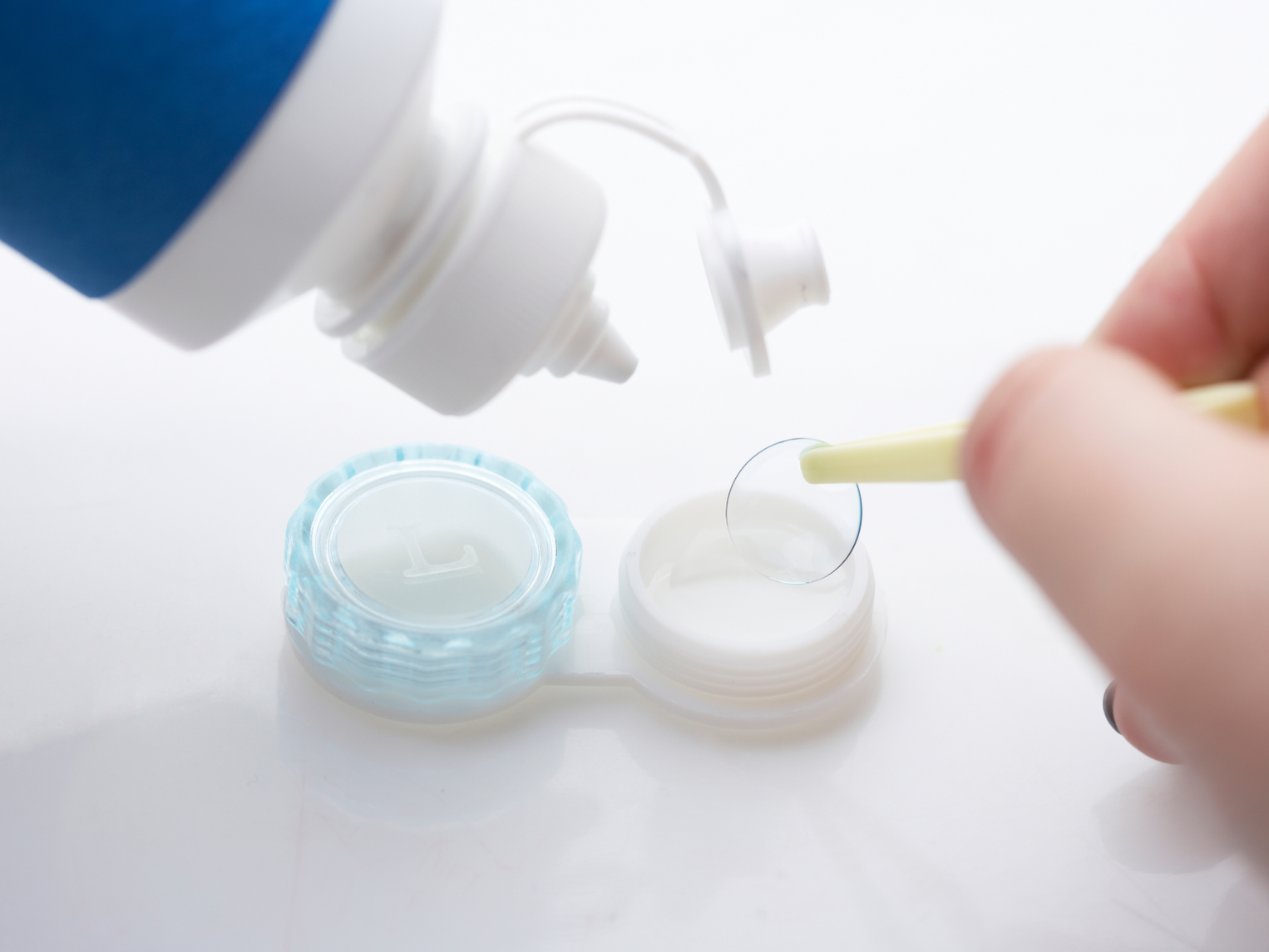
Corneal thickness and shape measurements depend on the cornea being in its natural state. Contact lenses temporarily change corneal shape, which is why lens wear is stopped for a period before the measurement examination — longer for rigid lenses than for soft ones — and why the interval is set by the clinic rather than by the person being examined.
In Korea, the pre-operative examination commonly includes one item that is not routine in most other countries: a genetic test for a corneal dystrophy that is more common in Koreans than in most other populations. Why that test exists and what it screens for is explained in why refractive surgery screening in Korea includes a genetic test.
Good to know
The measurement examination and the surgery are usually separate visits, and the contact lens break applies to the first of them as well as the second. If you wear lenses, the interval you are given before the examination is part of the eligibility assessment, because corneal shape measured while the cornea is still adapting back would be measured wrong.
Who is usually not a candidate for LASIK?
The people most often advised against LASIK are not defined by age. They are people whose prescription is still changing, whose cornea is too thin or too irregular for the planned correction, who have keratoconus, who have an autoimmune or corneal condition that affects healing, or whose dry eye has not responded to treatment. Pregnancy and breastfeeding are reasons to postpone rather than to rule the procedure out, and the same is usually true of a prescription that has changed in the past year.
Being unsuitable for LASIK is a finding about one procedure, not about vision correction in general. LASIK belongs to a group of procedures that reshape the cornea, and the reasons an eye is unsuitable for a flap-based procedure do not always apply to surface-based procedures such as LASEK and PRK, which treat the corneal surface without creating a flap. Where the limiting factor is the cornea itself, lens-based procedures that leave the cornea unchanged are assessed on different measurements. Which of these, if any, applies to a particular eye is decided at the examination.
Medical information
This article is general information about laser vision correction and is not medical advice. Individual results differ. Decisions about whether a procedure is appropriate, and about follow-up care, should be made with a qualified ophthalmologist after examination.