How long LASIK lasts depends on what is being measured. LASIK removes and reshapes corneal tissue, so it is not a temporary correction that wears off. The measured prescription can still change over time, and so can other parts of the eye. The most common change — near vision from around the forties — happens whether or not someone has had surgery.
Key takeaways
- LASIK reshapes corneal tissue, so it is not a temporary correction that wears off, although the measured prescription can still change over time.
- Some people experience myopic regression, a partial return of short-sightedness, which is more likely after larger corrections.
- Most people begin to notice presbyopia in their early to mid-forties, and reading glasses are commonly needed regardless of whether LASIK was done.
- A second procedure is possible for some people, and the amount of corneal tissue remaining is a major factor in whether it can be done.
How long does LASIK last?
LASIK reshapes the cornea, and large clinical audits report high refractive predictability and low retreatment rates for many patients. Some degree of regression can occur, particularly after larger corrections. Vision can also change because of other parts of the eye rather than the treated cornea. Results vary by individual.
The question is hard to answer with a single number because it can mean three different things: whether the corneal correction holds, whether short-sightedness partly returns, and whether age-related vision changes arrive. These have separate causes and separate timelines, and mixing them is why published answers appear to disagree.
Available clinical audits and follow-up studies generally report stable distance correction for many patients over their follow-up periods, although outcomes vary by prescription, the technology used, and the length of follow-up. Someone who had LASIK at 25 and needs reading glasses at 45 has not had a procedure that stopped working. The distance correction may be exactly where it was, while near vision has changed for reasons that have nothing to do with the cornea.
Important
Do not assume a vision change means the surgery has worn off. Distance vision, near vision, and overall clarity can each change for different reasons, and telling them apart requires a refraction test rather than self-assessment. An eye examination is more useful than self-adjusting with stronger glasses.
Why does vision change after LASIK?
Vision after LASIK can change for several reasons, and most of them are unrelated to the surgery. The eye keeps ageing after the procedure, and conditions affecting vision develop on their own schedule. Separating these causes matters because each has a different timeline and a different meaning.
The table below lists the main reasons in the order they typically appear, with an indication of which are related to the surgery itself.
Typical timing | What changes | Relationship to LASIK | |
|---|---|---|---|
| Myopic regression | Months to years after surgery | Corneal healing and remodelling shift the refraction | Related to the procedure |
| Presbyopia | Usually noticed in the early to mid-forties | The lens inside the eye loses flexibility | Unrelated; develops in nearly everyone |
| Cataract | Usually from around the sixties | The lens gradually clouds | Unrelated |
| Other eye conditions | At any age | Conditions such as glaucoma, retinal disease, or diabetic eye disease affect vision independently | Not specifically related to LASIK |
Myopic regression is the item most directly linked to the surgery itself. The others follow the eye's own timetable, and they arrive in a predictable order: a possible shift in the corneal correction during the first years, then a change in near vision from around the forties, then a gradual clouding of the lens decades later.
What is myopic regression?
In the first years after surgery, some people experience myopic regression — a partial return of short-sightedness. It reflects small optical and biomechanical changes as the cornea heals and remodels, which shift the refraction back toward myopia. It does not affect everyone, and it is more likely after larger corrections. Age-related or unrelated eye changes can also affect the measured refraction.
In a three-year follow-up of LASIK in a Korean population, myopic regression occurred over time, and higher pre-operative prescriptions were associated with lower outcomes. This is the same pattern reported in other long-term series: the more correction that was needed at the start, the more likely some of it returns.
Regression does not automatically mean further surgery. Whether observation, an updated glasses or contact lens prescription, or another procedure is appropriate is determined by examination.
Good to know
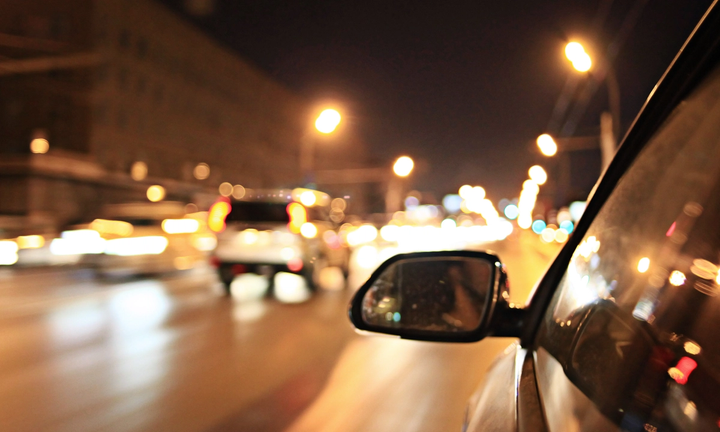
Regression and presbyopia produce different complaints. Regression tends to blur distance vision, so road signs and screens across a room become harder to read. Presbyopia blurs near vision, so text at reading distance is affected while distance vision stays clear. Noticing which one changed helps at the examination.
Will you need reading glasses after LASIK?
Some years later, usually in the forties, most people who had LASIK before 40 will need reading glasses. This is presbyopia, an age-related stiffening of the lens inside the eye. Most people begin to notice it in their early to mid-forties, although some notice near-vision difficulty earlier. LASIK reshapes the cornea and does not act on the lens, so it neither causes nor prevents this change.
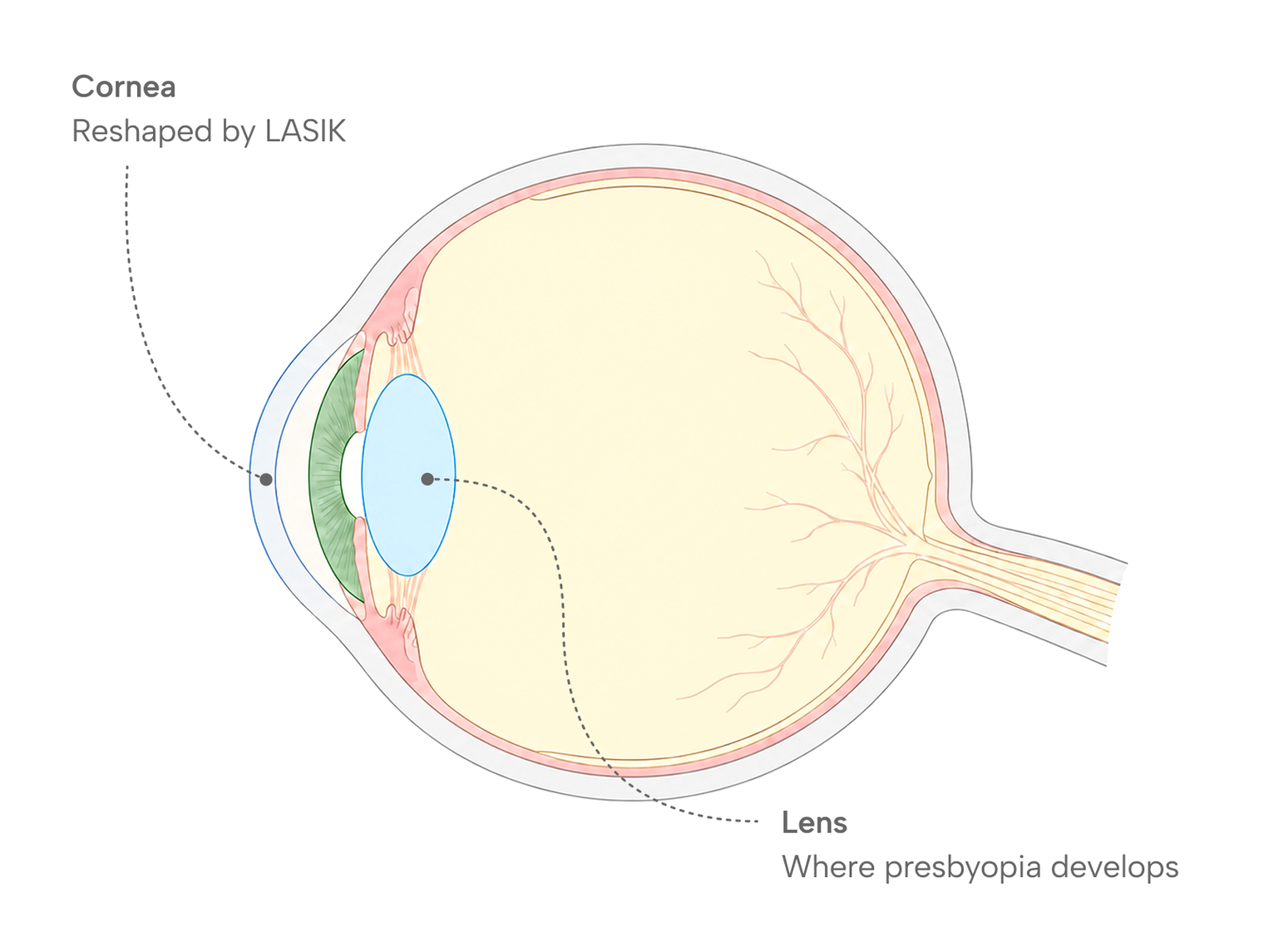
This is the single most common reason people conclude that LASIK stopped working. The distance correction is often unchanged, but the eye has lost some of its ability to shift focus to close objects. The same shift happens in eyes that have never needed correction at all.
Presbyopia continues to progress after it first appears, as the lens becomes progressively less flexible. The underlying ageing process cannot be stopped or reversed, although the resulting near vision difficulty can be corrected.
Correction options are not limited to reading glasses. Contact lenses designed for both near and distance vision, selected prescription eye drops, and several corneal and lens-based procedures are all in use. Which of these suits a particular eye depends on the prescription, the health of the eye, and how a person uses their vision day to day, and an ophthalmologist assesses this individually.
For people considering LASIK in their forties, the practical implication is that surgery can address distance vision but will not prevent the near vision change that is already underway. Understanding this before surgery avoids interpreting a normal age change as a failed result afterwards.
Can you have LASIK twice?
When the change is regression rather than an age-related one, a second procedure is sometimes possible. A second LASIK, often called an enhancement or retreatment, suits some people but not all. The amount of corneal tissue remaining is a major limiting factor, since the first procedure removes tissue and enough must be left for a second treatment to be done safely. It is not the only factor: corneal shape, prescription stability, ocular surface health, the condition of the original flap, age, and the reason for the vision change are all assessed. Whether retreatment is suitable is determined by examination rather than by how long ago the first surgery was.
Retreatment rates reported in studies vary widely, and the variation is largely a matter of how long patients were followed. A Singapore audit of 53,731 eyes reported an overall retreatment rate of 2.55%, falling below 1.2% from 2010 onwards, but with a mean follow-up of under three months. Studies that follow patients for years report higher cumulative figures, because retreatments accumulate over time. A single number taken out of that context is not informative.
Several conditions are usually assessed before a second procedure is considered. The prescription needs to have been stable rather than still changing. Corneal thickness and shape are measured again, as they are before a first procedure. The same contraindications apply, and a second procedure carries the same categories of risk as the first, which is discussed at the examination.
For the week-by-week course of recovery after a LASIK procedure, see our guide to LASIK recovery time.
What if retreatment is not suitable?
When a second procedure is not an option, other approaches may be discussed. These range from an updated glasses or contact lens prescription for the residual error to surface-based corneal procedures and lens-based procedures. Surface-based options still treat the cornea, while lens-based options work inside the eye. Which of these applies depends on why the vision changed and on the condition of the cornea.
Presbyopia is a separate case. It is not addressed by repeating a distance correction, since it originates in the lens rather than the cornea. Reading glasses, contact lenses designed for both distances, prescription eye drops and lens-based procedures are the options that apply instead. An ophthalmologist distinguishes between the two before recommending anything.
When to see a doctor
Gradual change over years is expected and can be assessed at a routine examination. Contact an eye doctor promptly instead if your vision changes suddenly or over a few days, if one eye changes noticeably more than the other, or if the change comes with eye pain, flashes of light, or a sudden increase in floaters. Rapid change has different causes from gradual change.
Medical information
This article is general information about laser vision correction and is not medical advice. Individual results differ. Decisions about whether a procedure is appropriate, and about follow-up care, should be made with a qualified ophthalmologist after examination.